









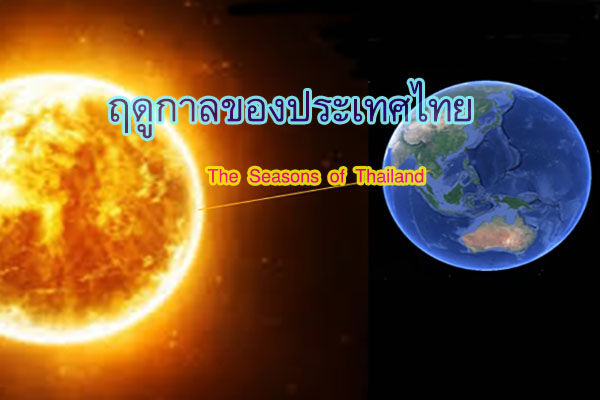
Thailand season: The factor behind the three seasons of Thailand – summer, rainy and winter seasons
Thailand's Three Seasons
1. Summer Season, From Mid-February to Mid-May
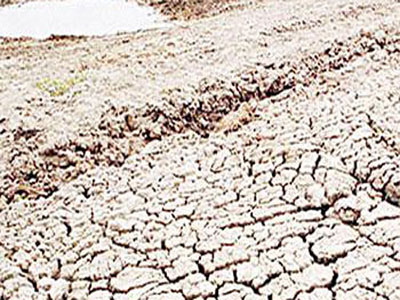
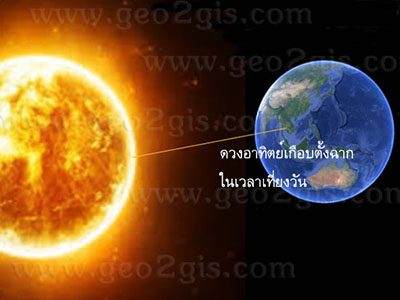
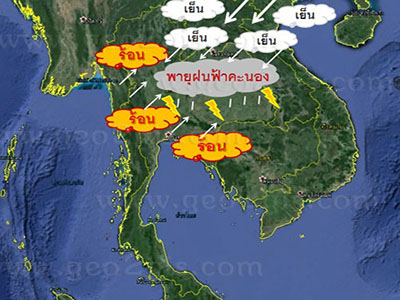
The period when the Northern Hemisphere tilts toward the sun is characterized by intense heat in Thailand, particularly during April when the sun is nearly overhead around noon, resulting in scorching temperatures.
However, during certain periods, the intrusion of cool air masses from China may lead to clashes between warm and cool air masses, giving rise to intense thunderstorms, gusty winds, or even the possibility of hailstorms. Nevertheless, there are also intervals during which this interaction results in a decrease in temperature.
2. The Rainy Season, From mid-May to mid-October.
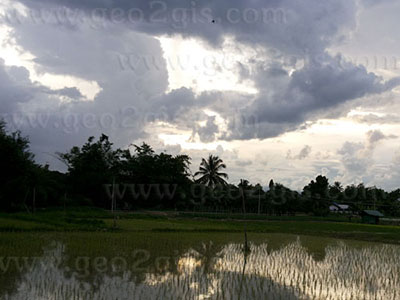
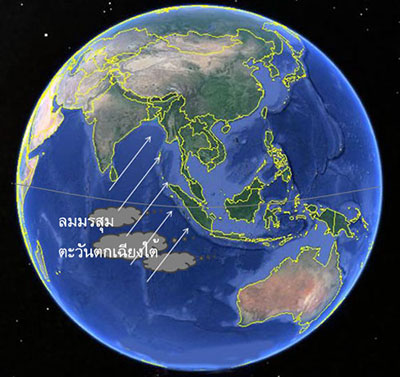
Around mid-May, the southwesterly monsoon prevails over Thailand, bringing extensive cloud cover and widespread rainfall, particularly along the coastal and mountainous regions facing the wind. Originating from the Indian Ocean on the southern hemisphere side, the southwesterly monsoon carries moist air masses across the equator to Thailand, where they meet low-pressure troughs passing through the country.
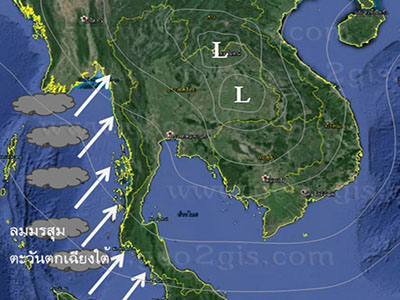
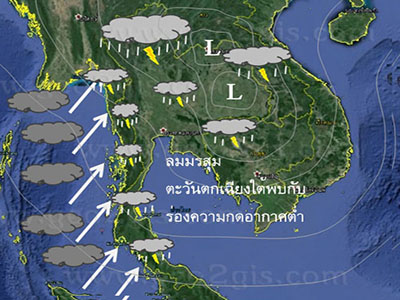
Nevertheless, during the normal rainy season, there is typically a rain lull around late June, as low-pressure troughs that initially pass through southern Thailand gradually shift northward and exit through the southern part of China. Subsequently, around July, another low-pressure trough descends southward through Thailand, resulting in a renewed period of heavy rainfall.
3. Winter Season, from mid-October to mid-February.
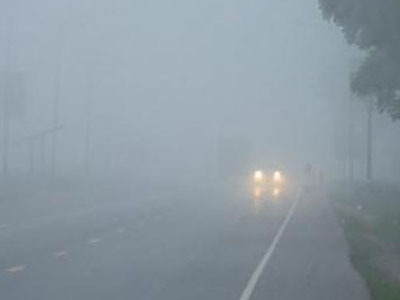
Around mid-October, the northeasterly monsoon, which brings winds from the northeast instead of the southwest, enveloped Thailand. Originating from the northern hemisphere, this northeasterly monsoon gathers cool and dry air masses from the regions near Mongolia and China, sweeping them across Thailand.
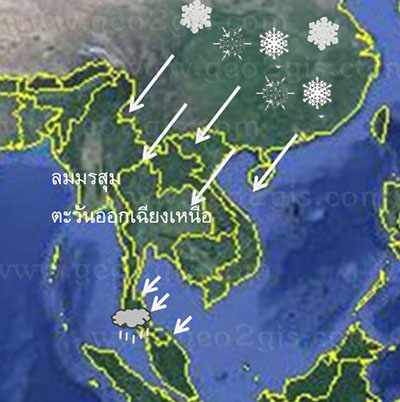
Therefore, this signifies the beginning of winter. The air in the northern and northeastern regions starts to cool and become dry. The central region might have occasional thunderstorms, whereas heavy rainfall is predominant in the southern part, especially along the eastern coast. The northeasterly monsoon brings the moisture from the Gulf of Thailand, causing this.
Entering a season that does not meet normal times.
Nevertheless, factors like global warming and climate change, as well as phenomena like El Niño and La Niña, can disrupt Thailand's seasonal patterns. The Thai Meteorological Department announces the onset of each season every year. The Meteorological Department declared the beginning of summer in 2003 on March 5, which is later than the usual mid-February onset. Likewise, on November 14, 2003, the department declared the start of winter, which is usually around mid-October.